Pregnancy Can Change Your Eyes Too
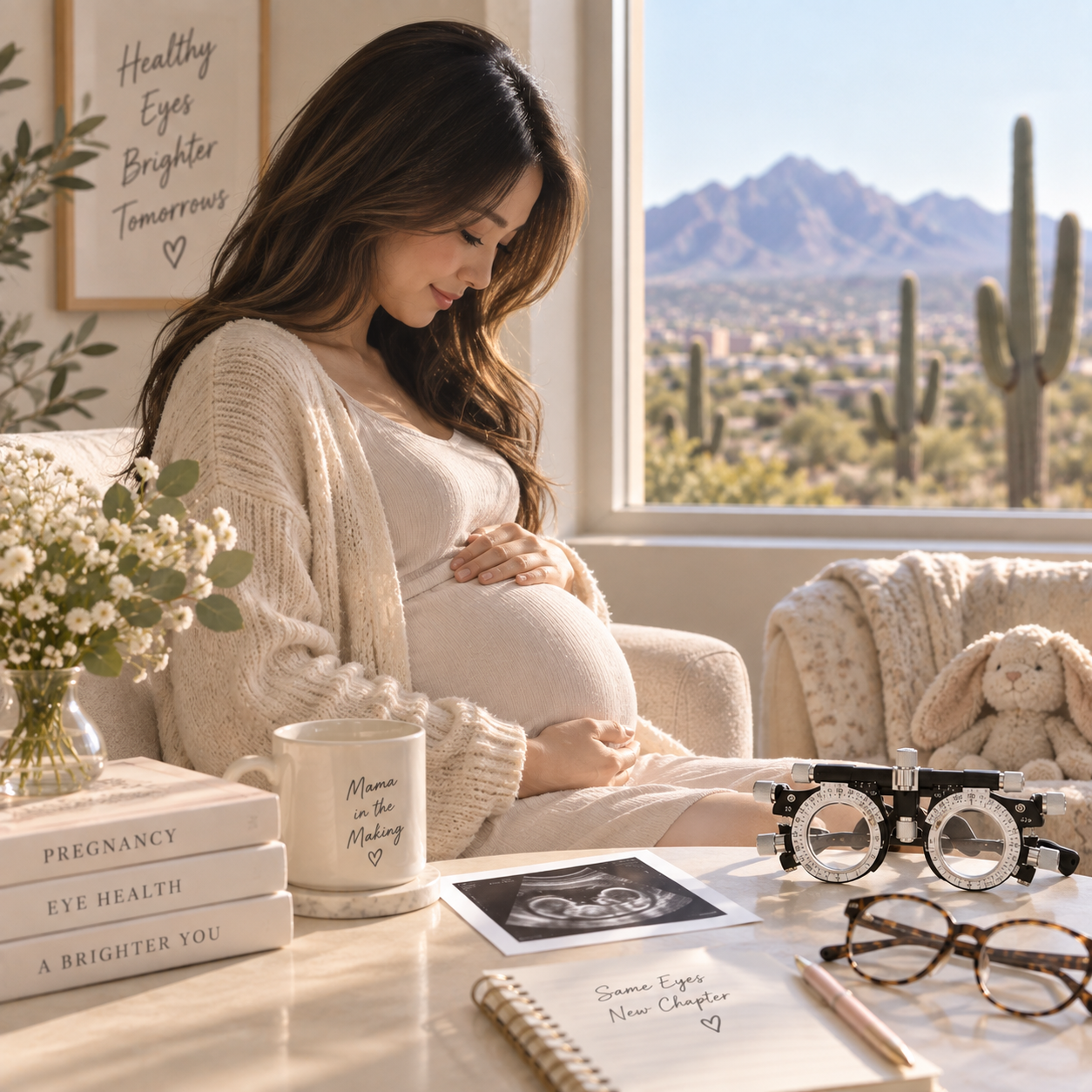
Something I understood as an optometrist—but appreciated very differently after becoming pregnant myself.
I was pregnant with my daughter in 2024, and even as a healthcare provider, pregnancy made me realize just how many changes can happen to your body in such a short period of time.
There are the things everyone talks about—and then there are so many things nobody seems to mention.
Your eyes are one of them.
As an optometrist, I already knew that pregnancy could affect the eyes and vision. But going through pregnancy myself made me think about it differently. I realized that if you're not in eye care, why would you know that your changing prescription, suddenly uncomfortable contact lenses, or dry and fluctuating vision might have something to do with pregnancy?
So if you happened to find this because you're pregnant, planning to become pregnant, recently had a baby, or you're simply curious, I want you to leave knowing a little more about what can happen to your eyes during pregnancy—and, more importantly, which changes shouldn't be ignored.
Yes, Your Prescription Can Actually Change
Pregnancy causes significant hormonal and physiologic changes throughout the body. Changes in fluid balance and the cornea can sometimes temporarily affect the way your eyes focus, which means your glasses or contact lens prescription may seem different during pregnancy.
You may notice that things aren't quite as crisp as they used to be or that your vision seems to fluctuate.
That doesn't automatically mean you need new glasses.
If the prescription change is relatively small and the eyes are otherwise healthy, sometimes it makes more sense to wait and see whether your vision stabilizes after pregnancy rather than immediately investing in a new prescription.
Of course, every situation is different—which is why an eye examination is helpful if you're noticing a meaningful change.
Your Contact Lenses May Suddenly Feel Different
This one can be especially frustrating.
You may have worn the same contact lenses comfortably for years and suddenly find that they're dry, irritating, or simply don't feel the same.
Pregnancy-related changes can affect the cornea and tear film, which may change both vision and contact lens comfort.
Sometimes we can improve things by adjusting the contact lens, wearing schedule, or addressing dryness. Other times, your eyes may simply tolerate contacts differently during this period.
And no—you aren't necessarily imagining it.
Dry Eyes Can Be Part of It Too
Hormonal changes can affect the ocular surface and tear production, so some people experience increased dryness, burning, irritation, watering, fluctuating vision, or contact lens intolerance during pregnancy.
Interestingly, dry eye doesn't always feel “dry.” Sometimes excessive watering is actually a response to irritation on the surface of the eye.
If your eyes suddenly feel different during pregnancy, mention it at your eye examination. There may be simple things we can do to make you more comfortable.
But Please Don't Assume Every Vision Change Is “Just Pregnancy”
This is probably the most important part of this entire article.
While some visual changes during pregnancy can be temporary and relatively harmless, sudden or significant changes in vision deserve attention.
Pregnancy can be associated with medical conditions such as preeclampsia, and visual symptoms can sometimes accompany them.
New symptoms such as sudden blurred vision, flashing lights, new spots or visual disturbances, double vision, significant vision loss, or other abrupt changes shouldn't simply be dismissed as hormones.
If something about your vision changes suddenly or substantially during pregnancy, contact your obstetric healthcare team and/or an eye-care professional promptly. Depending on the symptoms, urgent evaluation may be appropriate.
I'd much rather have someone ask and find out everything is okay than ignore something important because they assumed pregnancy was supposed to make them feel weird.
What About After the Baby Is Born?
Your hormones don't immediately return to their pre-pregnancy state the moment you deliver.
The postpartum period brings another enormous adjustment, and some pregnancy-related visual or ocular-surface changes may take time to settle.
If your prescription changed during pregnancy, this is another reason we may recommend allowing things to stabilize before making certain long-term changes—provided your eyes are healthy and your symptoms aren't concerning.
And if you're breastfeeding, taking new medications, or experiencing other postpartum changes, tell your eye doctor. Those details can sometimes be relevant when we're deciding how best to manage your eyes.
Pregnancy Taught Me Something I Already Knew
Before becoming pregnant, I understood all of this academically.
I learned it in school. I've taken care of pregnant patients. I knew hormones could affect the eyes.
But experiencing pregnancy made me appreciate something different:
There is an enormous difference between a doctor knowing something and a patient knowing that it's something they should even ask about.
You can't ask a question about something you never knew could happen.
That's one of the reasons I wanted to write this.
If one pregnant patient reads this after wondering “Why are my contacts suddenly so uncomfortable?” or “Why does my prescription seem different?” and realizes that it may be worth mentioning to their eye doctor, then this article did what I wanted it to do.
And even more importantly, if someone experiencing a sudden or unusual visual symptom realizes not to simply dismiss it as pregnancy, then I'm especially glad they found this.
Pregnancy changes an incredible amount about your body.
Your eyes can be part of that story, too.
— Suzzane Li, OD, FAAO, ABCMO
Simpli Eye Care PLLC, Managing Optometrist