“But I Can See Fine!” — Do I Really Need an Eye Exam?
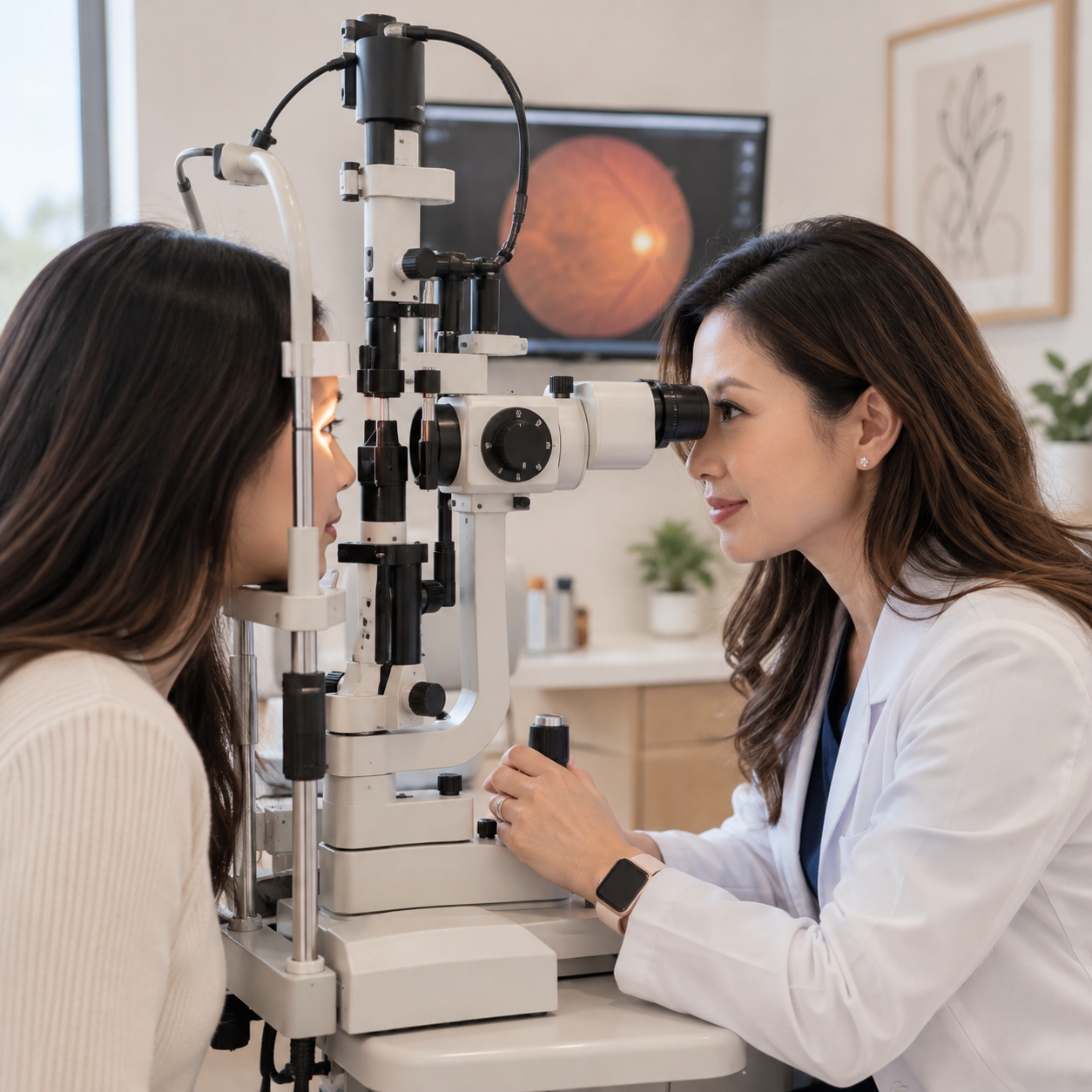
An eye exam is about more than figuring out whether you need glasses
I hear some version of this pretty often: “My vision is fine. I don't think I need an eye exam.”
And I completely understand why.
If you can see the road signs, read your phone, work on your computer, and aren't having any problems with your eyes, why would you need to have them checked?
Here's the thing: Seeing well and having healthy eyes aren't exactly the same thing. You can have 20/20 vision and still have something going on with your eyes that you wouldn't necessarily notice yourself.
That's one of the reasons routine eye exams matter—even when everything seems perfectly fine.
Yes, We Check Your Prescription
Of course, part of your eye exam is figuring out how well you see. This is the familiar: “Which is better…1 or 2?” We check for nearsightedness, farsightedness, astigmatism, and changes in your prescription. And yes, sometimes the exciting conclusion is: Nothing changed!
That's actually good news.
You don't need a new prescription just because you came in for an eye exam.
But checking your prescription is only one part of what we're doing.
We're Also Looking at Your Eyes
Think about your regular physical.
You don't go to your primary care doctor only when something hurts. They check things like your blood pressure, listen to your heart and lungs, review your medications, and look for changes you may not have noticed yourself.
An eye exam has a similar idea behind it.
We're looking at the different structures of your eyes and checking for things that may not affect your vision yet.
That can include the front of your eyes, your eye pressure, your optic nerves, your retinas, your macula, and the blood vessels inside your eyes.
And this is where an eye exam becomes much more than: “Do I need new glasses?”
Some Eye Problems Are Quiet
One of the tricky things about eye disease is that not everything gives you a warning sign right away.
Some conditions can develop gradually. Your brain is also incredibly good at adapting to slow changes, so you may not realize that something is different. And we have two eyes!
If one eye isn't seeing quite as well as the other, the better eye may compensate enough that you don't notice it during everyday life.
Conditions such as glaucoma are a good example of why symptoms alone don't always tell us the whole story. Early glaucoma often doesn't cause noticeable symptoms, and vision loss usually begins outside of your central vision.
By the time you notice certain changes yourself, they may have been developing for quite some time. That's why I'd much rather find something when you're sitting in my chair saying: “But I see perfectly fine!” than wait until you're sitting there saying: “Something is wrong with my vision.”
Your Eyes Can Sometimes Tell Us About More Than Your Eyes
This is one of the coolest things about eye care.
When we look inside your eyes, we can actually see blood vessels directly. We may sometimes notice changes associated with health conditions such as diabetes or high blood pressure during an eye examination.
That doesn't mean your optometrist replaces your primary care doctor. We definitely don't.
But your eyes are part of your body, and sometimes something we see during an eye exam gives us another piece of information about your overall health.
If something doesn't look quite right, we may recommend that you follow up with your primary care provider or another specialist.
“But I Had My Eyes Checked for My Glasses.”
This is another common misunderstanding.
Having your prescription checked and having the health of your eyes examined aren't necessarily the same thing. The goal of a comprehensive eye exam isn't simply to give you a glasses prescription.
We're asking two different questions: “How well are you seeing?” and “Do your eyes look healthy?”
Sometimes the answer is: 20/20 and everything looks great—that's my favorite answer!
A normal eye exam isn't a wasted visit. It gives us a baseline and something to compare with in the future.
What About the Retinal Photo?
If you've been to our office, you've probably heard us talk about Optomap or dilation.
Both are ways of helping us look at the back of your eyes.
Optomap gives us a wide-field image of the retina that we can save and compare over time. Sometimes a tiny spot isn't particularly concerning by itself—but being able to look back and see whether it has stayed exactly the same for several years can be incredibly helpful.
Dilation allows us to examine the inside of the eye through an enlarged pupil and can be especially important when symptoms, medical history, or something we see during the exam calls for a closer look.
They aren't exactly the same thing, and there are situations where I may still recommend dilation even if retinal imaging was performed.
That's because we're choosing the examination that makes the most sense for your eyes, not simply checking boxes on a list.
Your Eye Exam May Change as You Get Older
What we're looking for at 20 isn't necessarily exactly what we're thinking about at 40, 60, or 80.
Our eyes change throughout our lives.
Younger adults may notice prescription changes, contact lens issues, dry eyes, or lots of computer-related eye strain.
Then one day, usually sometime around our 40s, our arms apparently become too short and the restaurant menu starts looking suspiciously tiny. 😂
That's presbyopia, the normal age-related loss of our ability to focus up close.
As we continue getting older, conditions such as cataracts, glaucoma, and macular degeneration also become more relevant.
So your eye exam changes with you.
And Kids Are Their Own Story
Children deserve a whole separate conversation—which is why I wrote another blog specifically about children's eyes.
A child being able to see a toy across the room doesn't necessarily tell us that both eyes see equally well or are working together properly.
Children also don't have an adult's ability to recognize that their vision isn't normal.
That's why childhood vision screening and appropriate eye examinations are so important, particularly when a child doesn't pass a screening or when there are concerns about their vision or eye alignment.
Sometimes the person who seems to be seeing perfectly well is exactly the person who doesn't know what they're missing.
Does Everyone Need the Exact Same Exam Every Year?
Not necessarily.
Your age, eye health, family history, medications, medical conditions, contact lens use, previous findings, and symptoms can all affect how often you should have your eyes examined and what testing makes sense.
Some people need to be seen more frequently than others.
That's why I don't love thinking about eye care as: “Everybody needs exactly the same thing every 365 days.”
I'd rather think of it as: Don't wait for blurry vision to be the only reason you have your eyes checked.
Your eye doctor can recommend an appropriate examination schedule based on your individual eyes and health history.
Sometimes “Everything Looks Great” Is the Best Result
I think people occasionally feel like they went to the doctor “for nothing” if we don't find anything wrong.
I look at it very differently.
If you come in, your prescription is stable, your eyes are healthy, and I get to tell you: “Everything looks great. See you next time.” That's a pretty successful eye exam.
And now we have a baseline.
If something looks different several years from now, we have something to compare it with.
Your eyes don't need to hurt, feel strange, or become blurry before they're worth checking.
You don't have to wait until you can't see well to take care of your eyes.
Sometimes the whole point is making sure they stay that way.
— Suzzane Li, OD, FAAO, ABCMO
Simpli Eye Care PLLC, Managing Optometrist